Translucent's AI Agents Helped Northwestern Medicine Uncover $84M in Payer Contract Opportunity

Translucent's AI Agents Helped Northwestern Medicine Uncover $84M in Payer Contract Opportunity



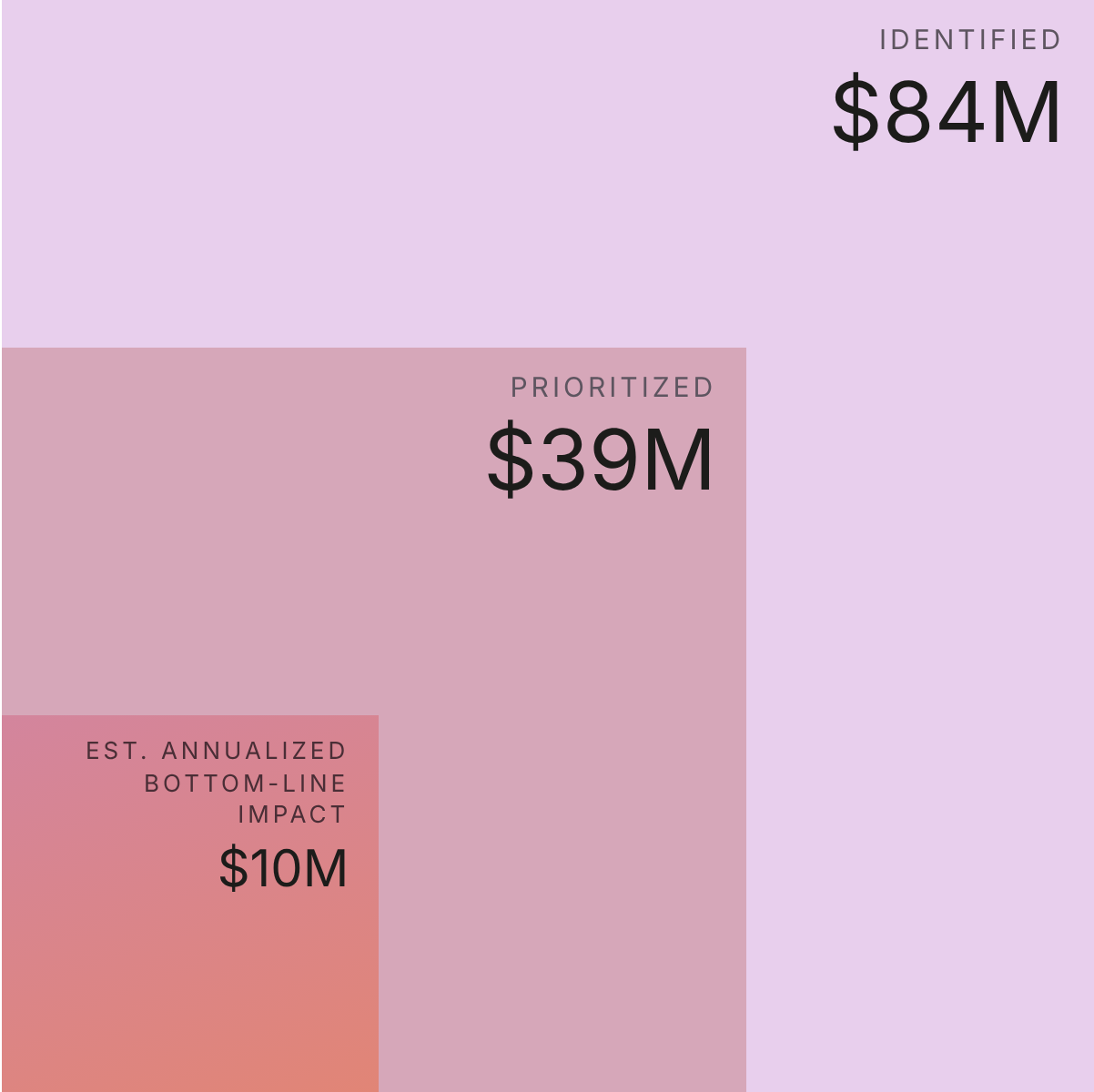
Translucent's AI agents found $84M in payer contract opportunity at Northwestern Medicine. $39M of that was prioritized for active payer contract negotiations, producing an estimated $10M in annualized bottom-line impact.
John Orsini, EVP and CFO of Northwestern Medicine, walked through how at Becker's CEO + CFO Roundtable in conversation with Translucent founder and CEO Jack O'Hara. Northwestern runs 11 hospitals and about 200 sites of care, with roughly $14 billion in net operating revenue. Its managed care team is experienced, but small next to the actuarial teams on the other side of the table.
Here's what changed when that team used Translucent’s AI agents.
Why payer negotiations got harder
Payers hold the data advantage, and the stakes keep rising. Healthcare costs more every year, and with rising premiums drawing scrutiny, payers push back hard on rate increases.
"The payers had a huge advantage in terms of the data." — John Orsini
Northwestern used to lean on external consultants to close that gap. The data was good, Orsini said, but the process wasn't nimble, and things got missed.
The stakes are high because commercial plans carry the system. With Medicare and Medicaid paying below cost, managed care contracts "really pay the freight for every health system."
Levelling the playing field
Every negotiation opens the same way, Orsini said: you're the most expensive in the market. Payers cherry-pick one service where that's true and apply it to the whole contract.
With deep data, Northwestern can answer precisely. Overall it sits in the upper quartile. It may be the most expensive in the area the payer singled out, while its physicians are below market against peer institutions.
"You can show them data and deep data... it evens the playing field." — John Orsini
The goal isn't brinkmanship. Northwestern doesn't want to terminate contracts. It wants rates that reflect the most complex care in the region, balanced by areas where it can come down. Since most commercial coverage is self-funded, Orsini frames it as a win for the system, the plan and the employers paying the bills.
What the agents uncovered
Translucent's agents identified $84M in payer contract opportunity. $39M was prioritized for active negotiations, and the work has produced $10M a year in annualized rate uplift.
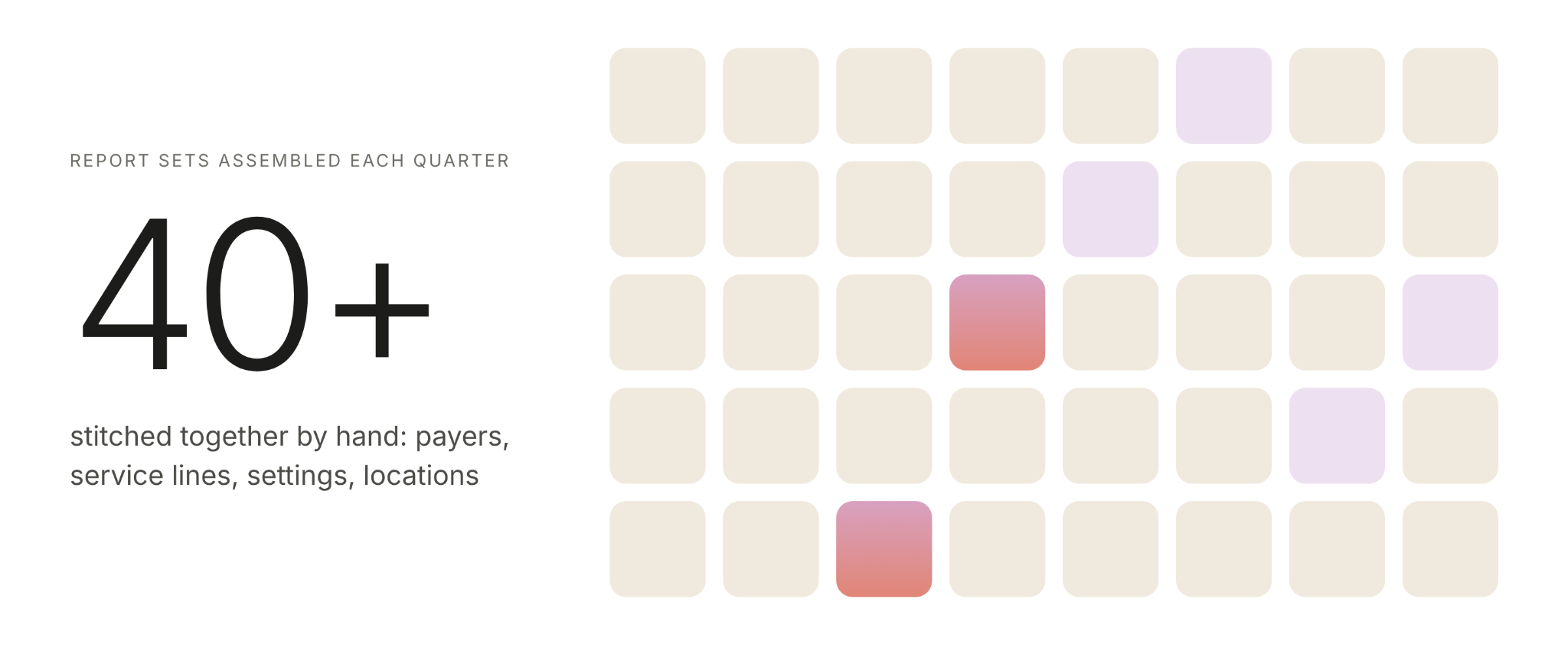
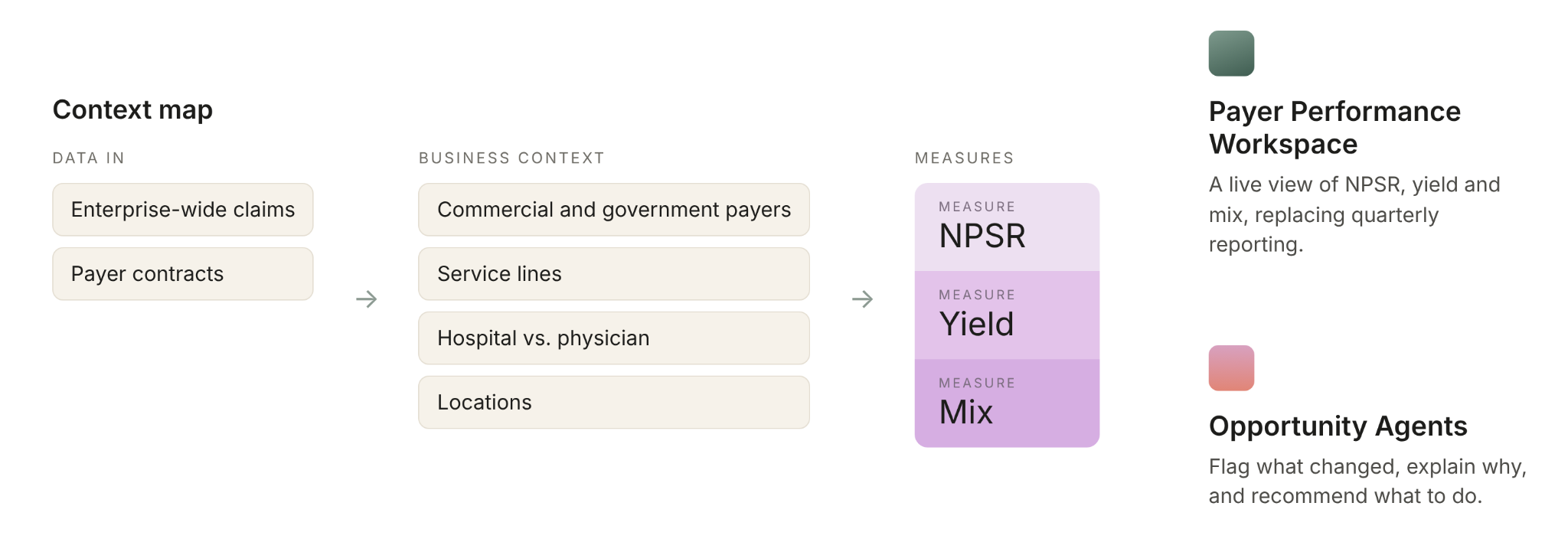
Before, payer performance was stitched together by hand from 40+ report sets every quarter. Translucent mapped enterprise-wide claims and payer contracts to Northwestern's payers, service lines, settings and locations. Agents now track net patient service revenue, yield and mix continuously, flag what changed, and recommend what to do.
The payoff showed up in a recent negotiation with a large payer. The agents surfaced that Northwestern's infusion rates were significantly below market compared with other commercial payers. Once the increase was agreed upon, Northwestern put a disproportionate share into infusion, a growing service it’s investing in, and its signature academic specialties.
"The payer was the roadrunner and we were the coyote. Now we're kind of both the roadrunners." — John Orsini
The payer pushed for no increase at one hospital. Because Northwestern manages to the whole contract, it could agree and still move more of the increase where complex care was underpaid. Orsini said he'd never had that level of insight before, even with consultants who had dozens of analysts.
Managed care's new job: from producing data to providing insight
The biggest change isn't headcount. It's what the team spends its time on.
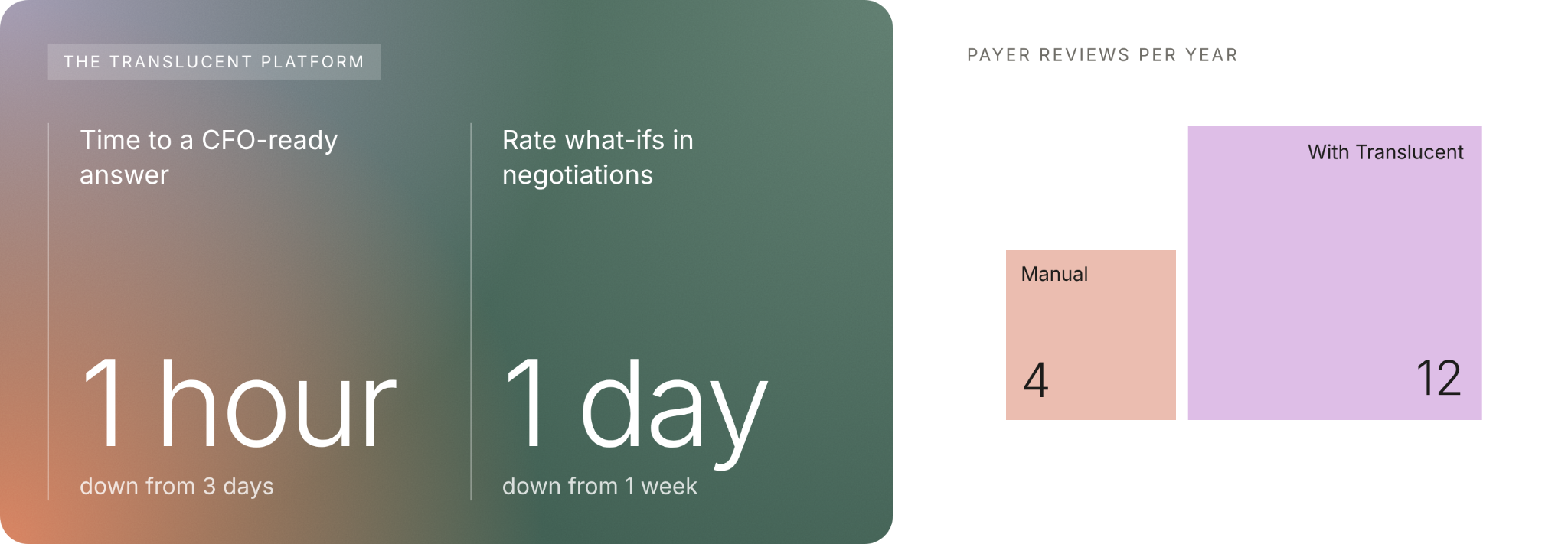
Northwestern's detailed payer dashboard used to come out quarterly, at regional level, after an effort no one could fully measure. Today it is distributed monthly, with views for every hospital and medical group, and a single analyst produces it in roughly three hours.
Translucent makes that cadence possible. Its agents pull enterprise-wide claims and payer contract data directly and map them to Northwestern's payers, products, service lines and sites of care. Translucent's Workspace keeps net patient service revenue, yield and mix current, replacing the manual quarterly build. Opportunity Agents then flag what changed, explain why, and calculate the financial impact, so the analyst's time goes to reviewing findings rather than assembling data.
"Quarterly is wildly insufficient." — John Orsini
The hours saved went back into higher-value work: more meetings with health plans about underpayments, and more time with operators on financial clearance and front-end performance.
Turnaround on executive requests has improved as well. Ad hoc analyses that once took "days, weeks... sometimes months," in Orsini's words, are now delivered quickly. The team has also shifted from reactive to proactive, bringing insights to leadership before they are requested.
The ROI discipline
Orsini is enthusiastic about AI and unsentimental about cost. With more than 45,000 employees, a health system could easily stack $50 million of AI spend on top of its existing workforce.
"It's not free... there has to be an ROI." — John Orsini
At Becker's he put a number on it: every dollar spent should prove it can find $1.20. Northwestern holds to that by working in a few deliberate ways:
- Pilot first. Northwestern doesn't commit before a tool proves itself. The managed care team was excited enough by the demo to put in extra effort onboarding, testing and validating it.
- Be precise about data feeds. Implementation includes security review and choosing the right source for each data set. Where the enterprise data warehouse disagrees with Epic or PeopleSoft, the team goes to the source and fixes what it finds.
Translucent CEO, Jack O'Hara, added that most "bad data" is really inconsistent definitions. That's why agents need the institutional context that lives in the managed care team's heads mapped out, not just the raw tables.
What's next: anywhere people are crunching high-volume data
Orsini sees the same pattern wherever staff are downloading, reconciling and eyeballing data by hand. He calls agents an extension of the workforce: "these little superhumans" that do the crunching and then let people ask follow-up questions.
- Contract terms. Comparing managed care, supply chain, IT and purchased-services contracts side by side, instead of two PDFs on two screens and a word search.
- Pharmacy rebates. Pharmacy spend is growing fast, and rebates are hard to audit without a three-way match. Agents can check every month that the rebates owed actually arrive.
- Clinical resource variation. Moving from "something is off in this service line" to the specific practice driving cost, such as overnight stays for procedures that are now outpatient, or uneven use of organ perfusion at about $95,000 per organ.
- Revenue cycle quality control. Northwestern is building an agent with Translucent that reviews every account rather than a sample, including accounts placed with outside vendors.
With HR1 pressure ahead, Orsini expects the work only to get more important.
See what's hiding in your payer book
Northwestern's managed care team didn't get bigger. It got faster, more precise, and equipped to negotiate from a position of strength.
Translucent is the financial intelligence platform for health system finance. Our AI agents connect claims, contracts and financial data to surface the opportunities hiding in your payer book, then help your team act on them. Get a demo to see what we can uncover for your organization.